Group
Grace Murray - 20gem3.github.io
Abby Miller - amiller13.github.io
Maria Mejia - mc-mejia.github.io
This group project proposal is adapted from Abby Miller’s original work.
Problem
Many people we know have described their relationships to museums through the phrase, “I’m not really a museum person.” When pressed, they often explain that they don’t actively dislike the act of looking at art. Rather, they find themselves bored at museums, intimidated by the knowledgable people surrounding them who can spend seemingly-unlimited amounts of time gazing at a single work.
This situation applies to a very traditional museum experience. In recent years, many museums, including the Williams College Museum of Art, have broadened the scope museum exhibits. The current display in (tiny) WCMA features exhibits that incorporate dance, biology, technology, history and classic art. This interdisciplinary, multi-media, approach to designing exhibitions is becoming more popular and making museum visits more enjoyable and accessible.
So why do so many people still believe that museums have nothing to offer them? What tools can we create to help people discover that looking at art is an activity anyone can enjoy 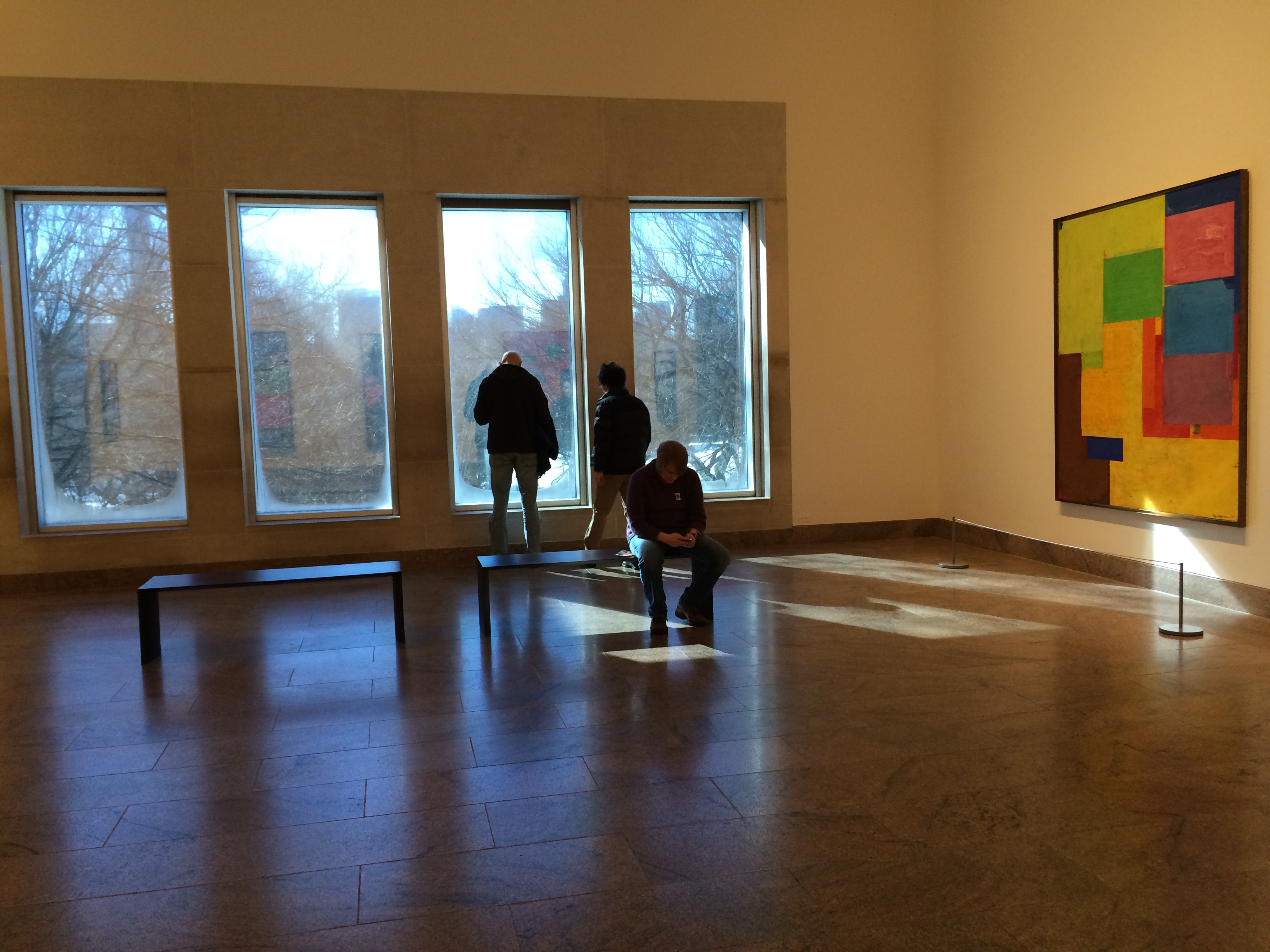
Analysis
In 2014, journalist Philip Kennicott wrote an article in the Washington Post directed at the disoriented museum visitor entitled: “How to view art: Be dead serious about it, but don’t expect too much.” He advises viewers to force themselves to spend lengthy amounts of time looking at art, to cultivate complete silence in museums and to study art before entering the museum doors.[1] This advice seems like it would only serve to further alienate museum visitors because it continues to present the act of looking at art as a skill that one needs to train to acquire. We need to adopt exactly the opposite approach and emphasize that any natural response to a piece of art is “correct.”
Proposal
We propose that the disinterested museum viewer needs an activity for their visit that occupies their brain so they do not feel bored and empowers them with confidence in their ability to critically view art. We want to create an app that will recognize your location as you walk around the museum and, when you pause in front of a work, will prompt you to type in your best guess for its meaning or central message. It will allow you to either submit this message anonymously or with your name and age.
After you submit your interpretation, it will show you a small number of bullets from others who have answered this question. The list will feature an explanation from the artist (if one exists), an interpretation from an art historian as well as a random assortment of other museum-goer’s ideas. You will then receive reward points in a number of categories: Creativity/Uniqueness, Similarity to the Artist, and Popular Response, to name a few. These reward points can accumulate over multiple visits if you choose to use the game with an account, rather than anonymously. Eventually, they can be redeemed for small prizes from the museum gift shop!
Hopefully, this activity will help a variety of people stay engaged as they visit a museum, as it could be played as a competetive game between friends, a way for parents to occupy their children, or simply an enjoyable activity while visiting the museum alone. It will also build confidence in two important ways. First, when one’s interpretation matches up with the ideas of others, they will feel more confident in their ability to look at art. Second, by presenting ideas of visitors and critics in tandem, the app will encourage users to think of all interpretations as subjective and equally legitimate. 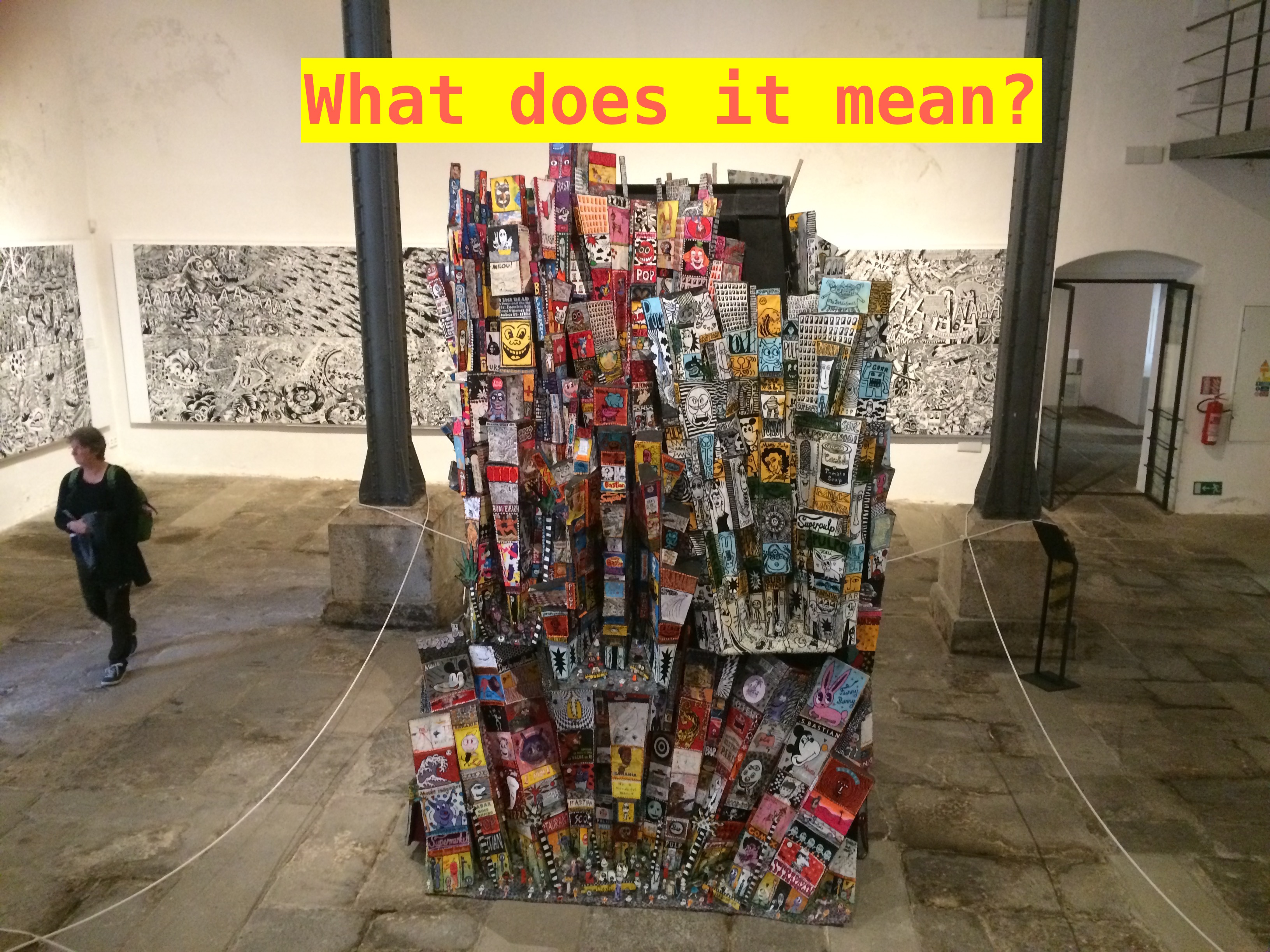
Works Cited
- Kennicott, Philip. “How to view art: Be dead serious but don’t expect too much.” Washington Post. October 4, 2014. https://www.washingtonpost.com/entertainment/museums/how-to-view-art-be-dead-serious-about-it-but-dont-expect-too-much/2014/10/01/28f7cdba-459a-11e4-b47c-f5889e061e5f_story.html?utm_term=.5ad99dcdb56d.